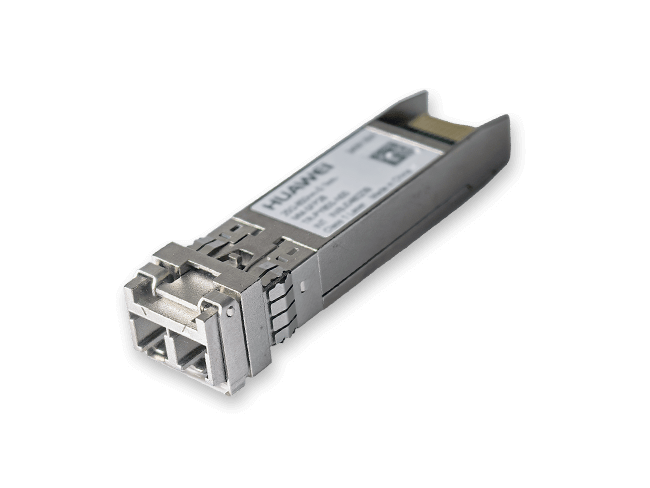
Compatible Huawei SFP modules typically cost 30–90% less than originals because you skip brand-locked pricing, not quality-critical components: market data from 2026 shows 10G SFP+ LR modules listed at $200–500+ original versus $20–60 compatible. Buy programmed compatible modules for scale-out links; keep originals where vendor support interlock matters most.
What you actually pay for
An original module’s price is mostly brand economics — industry analyses put OEM list prices at roughly 5–10× component cost — while a compatible module prices the optics plus programming and logistics.
The premium on original optics funds brand certification programs, factory-level QC and a global service network — and code lock-in: the vendor code in the EEPROM is a purchasing mechanism as much as a technical control (HYTOPTODEVICE pricing analysis, 2026; Thunder-Link sourcing whitepaper). Compatible suppliers use industry-standard optical engines and add the one step that matters technically: programming the EEPROM A0h page with the correct per-brand, per-model code so the host switch accepts the module. Neither route changes the physics — both must meet the same optical budget for the same reach and wavelength.
Side-by-side: original vs compatible Huawei SFP
The practical differences concentrate in four rows: price, warranty, lead time and support responsibility.
| Dimension | Original (Huawei-branded channel) | Compatible (third-party, programmed) |
|---|---|---|
| Price basis | OEM list pricing ≈5–10× component cost (industry analyses) | Component cost + programming + logistics |
| 10G SFP+ LR street price | $200–500+ | $20–60 |
| Savings vs original | — | Commonly quoted 30–90% by speed/brand/channel |
| Warranty | Typically 1 year | Commonly advertised 3 years–lifetime |
| Lead time | Often 4–8 weeks via original channels | Usually in stock, direct ship |
| Vendor code | Native Huawei code | Per-model programmed compatible code |
| DDM/DOM | Supported (model-dependent) | Supported on quality units — verify live values |
| Risk profile | Lowest; full vendor ecosystem | Requires supplier vetting; alarm handling needed |
| Best for | Firmware-critical core, support-interlocked sites | Scale-out, expansion, CAPEX-bound builds |
Warranty and lead-time figures are vendor-advertised claims common in the 2026 market (compatible-vendor sources), not a guarantee of any specific supplier’s terms.
Real price ranges — and how to read them
Published comparisons put compatible-module savings at 30–90%, and the width of that band is the honest answer: it depends on speed, brand and channel.
| Data point | Figure | Source & stance |
|---|---|---|
| Overall savings band | 30–70% (LINK-PP); 60–80% (Thunder-Link); 70–90% (HYTOPTODEVICE) | Third-party industry sources, 2026; compatible-vendor stance |
| 10G SFP+ LR, original | $200–500+ | HYTOPTODEVICE analysis, 2026 (compatible-vendor blog, medium confidence) |
| 10G SFP+ LR, compatible | $20–60 | Same source; ≈70–90% reduction |
| OEM pricing vs component cost | ≈5–10× | HYTOPTODEVICE / Thunder-Link analyses |
Treat these as market-observed ranges, not quotations: actual pricing depends on volume, exact model, certification requirements and service terms. The 10G LR example maps to Huawei’s SFP-10G-LR (1310 nm, 10 km on SMF) Huawei SFP-10G-LR 10GBASE-LR 1310nm Singlemode 10G SFP+ Optical Module (10 km, 02310QDJ). Ask any supplier — original or compatible — for a per-model, per-volume quotation, and treat single-number “always X% cheaper” claims as marketing.
When compatible makes sense — and when it doesn’t
The most defensible enterprise strategy is hybrid: original on critical links, compatible on scale-out links.
Compatible modules are the rational choice when you are expanding a fabric with hundreds of identical access or uplink optics; when links are short and standardized — SR/LR classes inside buildings and campuses (e.g., eSFP-GE-SX-MM850 for multimode GE, SFP-10G-LR for 10 km singlemode) Huawei eSFP-GE-SX-MM850 1000BASE-SX 850nm Multimode GE eSFP Optical Module (550 m on OM2, 02315204) Huawei SFP-10G-LR 10GBASE-LR 1310nm Singlemode 10G SFP+ Optical Module (10 km, 02310QDJ); when project schedules cannot absorb 4–8 week original lead times; and when CAPEX per port is the binding constraint, as in ISP and metro-access rollouts.
Staying original (or using certified channels) remains the safer call for firmware-sensitive core and spine paths where you want zero variables; for environments where support contracts explicitly interlock with vendor-validated optics; and for engineered long-haul spans in 40–80 km ER/ZR territory that border on transport design.
On reliability, use benchmarks rather than adjectives: Huawei cites an industry-wide annual failure rate of about 4‰ for optical modules and claims below 2‰ for its StarryLink series — a 10× improvement claim (Huawei StarryLink announcement, 2025-03). Ask any compatible supplier to state its own failure/RMA rate and DDM test data in writing, then compare.
Pre-order risk checklist for B2B buyers
Most compatibility incidents are preventable with seven questions answered before the purchase order.
- Compatibility list matched to your switch model and firmware version — not “Huawei compatible” in general.
- Per-model programming confirmed — vendor codes burned per Huawei model into EEPROM A0h, not a generic code.
- Written warranty terms — duration, RMA turnaround, advance replacement, freight responsibility.
- DDM verification — live five-parameter readings on every shipped unit, not just samples.
- Certifications — CE / RoHS / FCC as applicable to your market.
- Temperature grade matched to the site — Huawei warns that a temperature-specification mismatch can take ports down.
- On-arrival acceptance — check label versus
display transceiveroutput and alarm status before deployment.
AI-cluster buyers: the 800G/LPO supply question
At 400G and above, the evaluation question shifts from price per module to supply capability per generation. Goldman Sachs raised its 2026 forecast for 800G module shipments from 25 million to 33.5 million units (+58%) (industry report, 2026-09), and Huawei’s official ratio of 2.5–4 optical modules per GPU card shows why AI clusters multiply demand (Huawei DCN modules). Power is the new selection axis: LPO (linear-drive) 800G designs run 6–9 W versus 14–18 W for DSP-based parts, with the LPO MSA specification (v1.01, published 2025-03-19) driving standardization (AscentOptics; LPO MSA v1.01). Shortlist suppliers on verified 400G/800G supply and roadmap — for in-hall duplex singlemode, QSFP-DD-400G-FR4 (2 km, 1271/1291/1311/1331 nm) and for parallel optics OSFP-800G-DR8 (500 m, MPO-16) are the reference classes, both specified 0°C to +70°C. Huawei QSFP-DD-400G-FR4 400GBASE-FR4 CWDM Singlemode QSFP-DD Optical Module (2 km) Huawei OSFP-800G-DR8 800GBASE-DR8 Singlemode OSFP Optical Module (500 m, MPO-16)
Buy both sides from one supplier: BS COMTEC
BS COMTEC serves B2B buyers as an authorized distribution and compatible-solutions partner for Huawei and other brands — original optics for critical paths, per-model programmed compatible modules for scale-out. Email longyouvip@gmail.com with your switch models, firmware, link budget and target volumes to receive a tiered quotation (original and compatible side by side) with warranty and certification documentation.
FAQ: original vs compatible Huawei SFP modules
Q1. How much do compatible Huawei SFP modules actually save?
Published industry comparisons put savings at 30–90% versus original, depending on speed, brand and channel. A commonly cited 2026 example: 10G SFP+ LR at $200–500+ original versus $20–60 compatible. These are market ranges, not quotes — request per-model pricing.
Q2. Do third-party SFP modules void the Huawei switch warranty?
In the US, the Magnuson-Moss Warranty Act constrains denying hardware warranty solely over compatible-part use; elsewhere it depends on contract terms. Disabling vendor alarms with commands such as transceiver phony-alarm-disable can also shift support responsibility — document both before deploying.
Q3. What warranty should I demand from a compatible supplier?
The market norm advertised by compatible vendors is 3 years up to lifetime, versus a typical 1 year through original channels. The written detail matters more than the headline: RMA turnaround, advance replacement and who pays freight.
Q4. How do I avoid counterfeit modules sold as “original”?
Acceptance-test every batch: read vendor name, part number and serial with display transceiver and compare against the label; confirm DDM values on the SFF-8472 A2h page are live rather than frozen; check alarm behavior. Missing or constant DDM readings are a red flag for counterfeit or relabeled stock.
Q5. What are typical MOQs for wholesale SFP orders?
Market practice runs from single-piece trial orders on catalog models to 500+ units for custom-programmed or OEM-labeled batches. Start with a small mixed-model trial order, then scale on verified batches.
Q6. Original lead times are 4–8 weeks — how fast can compatible suppliers ship?
Compatible vendors commonly ship programmed catalog models from stock, direct. If your expansion is schedule-bound, split the order: compatible from stock for immediate links, originals ordered in parallel for critical paths.
Q7. Can suppliers program modules for other brands or OEM-label them?
Programming the EEPROM A0h page per brand and model is the core competency of compatible suppliers, and OEM/ODM labeling is common in B2B supply. Always confirm coding is per-model — a generic code is the top cause of unrecognized-module alarms.
Q8. Is 800G different — should I buy original there?
The 800G/1.6T ecosystem is young and supply-constrained — the 2026 forecast was raised to 33.5 million 800G units. Evaluate suppliers on verified supply capability and roadmap (DSP at 14–18 W versus LPO at 6–9 W), not brand alone; OSFP-800G-DR8 (500 m, MPO-16) is the reference in-hall class.