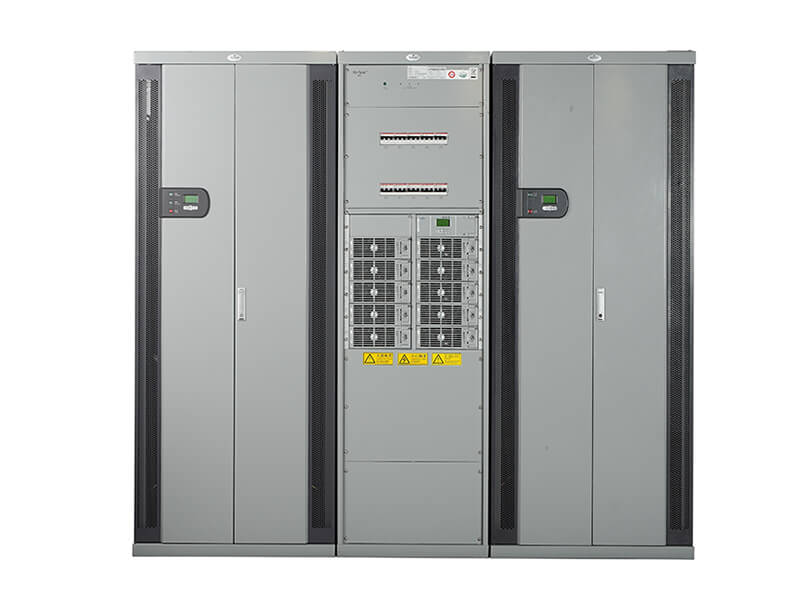
The telecommunications industry has undergone a quiet but profound transformation over the past ten years. Behind every 5G antenna and every edge data center sits a piece of infrastructure that has evolved far faster than most people realize: the 48V DC power system. As a distributor specializing in telecom power for the past decade, we have watched this evolution from the front row — and supplied the equipment that made it possible.
2015–2017: The Efficiency Revolution
Ten years ago, a typical telecom site ran on switched-mode rectifiers with efficiency hovering around 90–92%, paired with valve-regulated lead-acid (VRLA) batteries that demanded regular maintenance and ample space. The first wave of change came with high-efficiency rectifier modules pushing conversion efficiency to 96–98%. A single 3kW module running at 98% efficiency instead of 91% saves roughly 200 kWh per module per year — multiplied across thousands of sites, the savings became a board-level conversation. Manufacturers like Vertiv (Eltek), Huawei and Delta led this shift with modular platforms that let operators upgrade capacity by plugging in modules, not replacing cabinets.
2018–2020: Lithium Changes the Site
The second transformation was chemical. Lithium iron phosphate (LiFePO4) batteries began replacing VRLA banks at scale: half the footprint, three times the cycle life, and built-in battery management systems that report state-of-health remotely. Combined with compact embedded power systems — cabinets that integrate rectifiers, distribution, batteries and monitoring in one 600mm enclosure — operators could finally deploy reliable power in places where a traditional equipment room simply would not fit. 5G rollouts accelerated everything: massive MIMO antennas pushed site power demand from 3–5kW to 8–12kW, forcing a redesign of both rectifier capacity and battery autonomy.
2021–2023: The Intelligent Site
Remote operations became the norm rather than the exception. Modern power systems now stream real-time data — rectifier status, battery temperature, load trends — to central platforms, enabling predictive maintenance instead of scheduled truck rolls. Solar-hybrid architectures matured in off-grid and unstable-grid markets across Africa, the Middle East and Southeast Asia: MPPT solar controllers integrated directly into 48V power systems, diesel generator runtime dropping by 70–90% in well-designed hybrid sites.
2024–2025: Where We Stand Today
Today’s flagship platforms — Vertiv NetSure, Huawei ETP/DBU series, Eltek Flatpack2 — combine 98%+ efficient rectifiers, intelligent lithium, and full remote management in systems that install in hours. Carbon-distribution thinking has arrived too: right-sizing power per site based on traffic growth rather than over-provisioning.
What the next decade holds
Higher-voltage distribution (240V/336V DC for data halls), deeper AI-driven energy optimization, and recycling-ready battery ecosystems. One thing is certain — the 48V DC system will remain the backbone, and we will keep stocking the platforms that power it.
Planning a power upgrade? Email longyouvip@gmail.com with your site list and load profile — we configure, quote and supply complete 48V DC and UPS systems from Vertiv, Huawei and Delta, batteries included.