Buying a UPS is easy. Buying the right UPS — one that survives your site’s real conditions for the next eight years — requires answering five questions honestly. This guide distills what we have learned supplying Vertiv, Delta and Eaton systems into industrial and telecom projects worldwide.
1. Online double-conversion, or line-interactive?
If your load is sensitive (servers, telecom equipment, medical devices, precision instruments), an online double-conversion UPS is non-negotiable: it regenerates clean sine-wave power regardless of what the grid does. Line-interactive units cost less but pass through voltage fluctuations — acceptable for office equipment, risky for anything with a processor inside.
2. Size for real load, not nameplate
Add up actual running wattage (not VA nameplates), apply a 25–30% growth headroom, and never run a UPS above 80% of rated capacity continuously. A 10kVA UPS feeding 8kW of real load is already at its limit. For three-phase loads above 20kVA, modular systems like the Liebert APM or Eaton 93PM let you grow capacity in 25–50kVA increments instead of replacing the whole unit.
3. Rack, tower, or integrated cabinet?
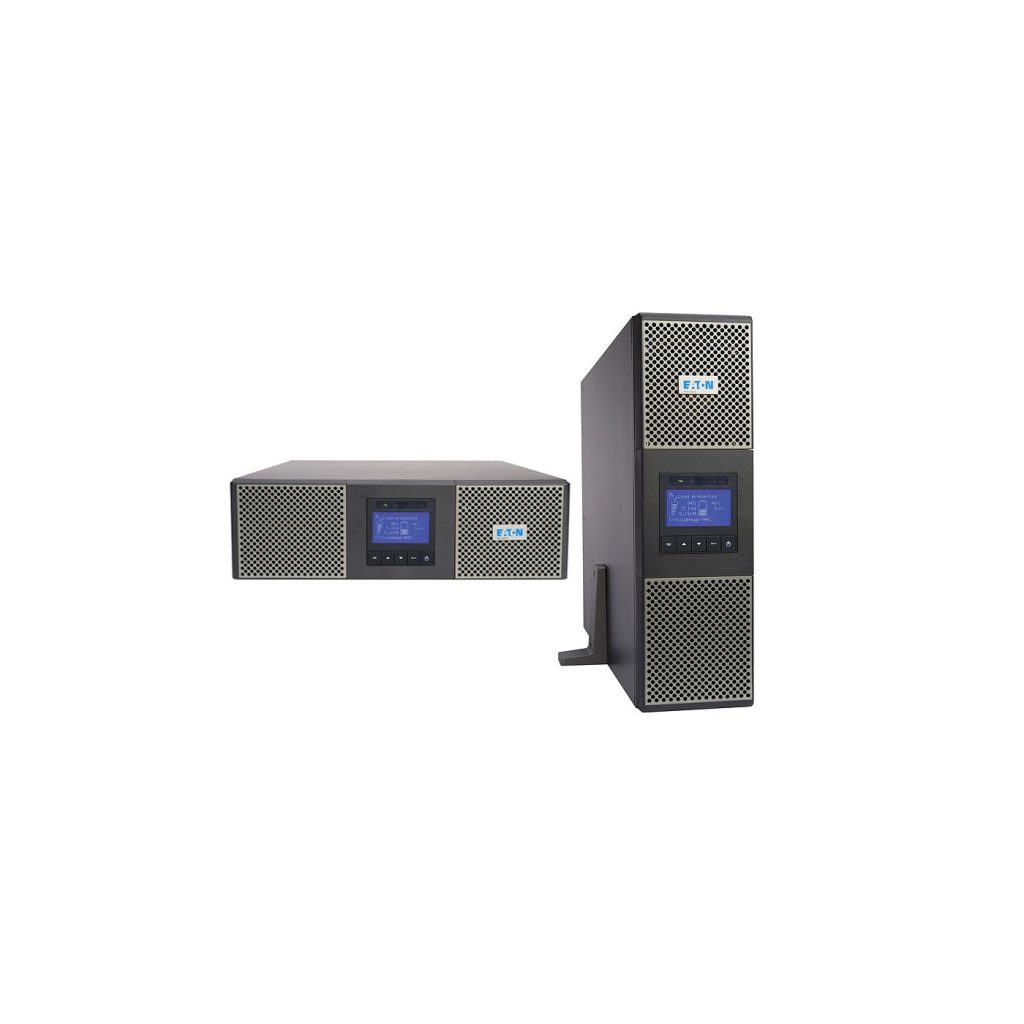
Rack-mounted (Liebert ITA2, GXE) saves floor space in data rooms; tower formats (GXT5, Amplon) tolerate harsher dust and heat in industrial settings; integrated cabinet UPS systems (EXS, 93PM) ship pre-wired with batteries and distribution — the fastest path from delivery to protected load.
4. Battery runtime: calculate the real number
Runtime depends on load percentage, battery type and temperature. Standard 5–10 minute autonomy covers graceful shutdown; longer runtimes need extended battery cabinets or generator pairing. In high-ambient sites, lithium batteries hold capacity far better than VRLA above 30°C — worth the premium in the Gulf and Sub-Saharan Africa.
5. Management and serviceability
Network card monitoring (SNMP/HTTP), relay dry contacts for integration with existing SCADA, and hot-swappable batteries/modules determine whether a power event is a five-second alarm or a five-hour outage.
Our takeaway
Match the topology to the load, size for growth, and invest in monitoring. When in doubt, send us your load list — we configure and quote complete systems, batteries included. Email longyouvip@gmail.com and our engineers will come back with a right-sized proposal.