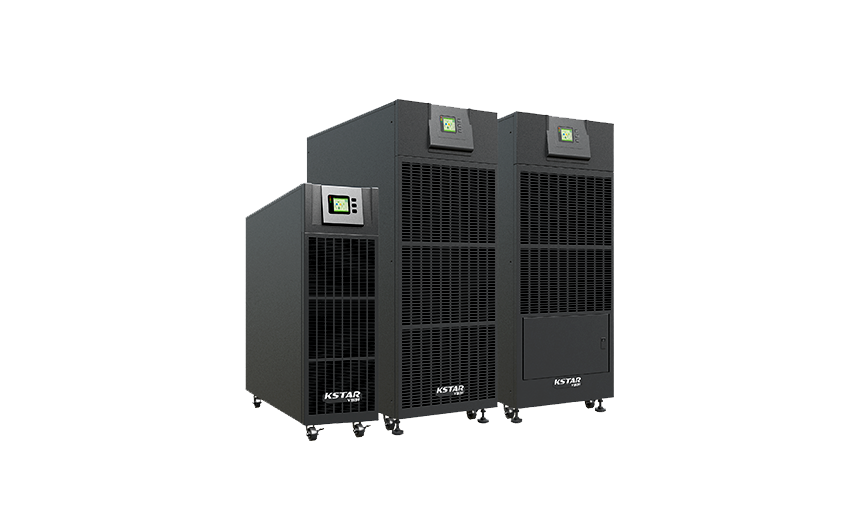
B2B buyers search “KSTAR UPS price” and expect a number on the screen. The honest answer: a UPS quote is a configuration, not a sticker. Two buyers both asking for a “KSTAR UPS” can end up 5–8× apart in price because one needs a 3 kVA rack unit with VRLA batteries and the other needs an N+1 three-phase system with lithium storage. This guide breaks down what actually drives KSTAR UPS pricing — across the YDC3300 rack class, the HPm three-phase family (including searches for “HPm 3350”), and 40 kW rack loads — so you can brief a supplier precisely and get a comparable quote fast.
What You Actually Pay For in a KSTAR UPS

Four variables dominate the final number:
- Rectifier/inverter topology. Online double-conversion units cost more than line-interactive, but they are the default for telecom and IT loads. In three-phase, IGBT-based rectifiers with low input THDi carry a premium — and pay it back when you pair the UPS with a generator (more below).
- Battery choice. VRLA blocks are the cheapest upfront and the most expensive over 5 years in an outdoor or high-cycle application. A 48V lithium system such as KSTAR SmartLi (48V 100Ah rack modules) costs more per kWh on day one but survives deeper daily cycling and cuts replacement labor.
- Redundancy and architecture. A single 50 kVA unit, two units in N+1, and a fully modular frame are three different quotes for the same kW of IT load. Decide this before you ask for pricing.
- Delivery scope. Batteries included or excluded? Start-up and commissioning on site? Shipping terms to your port? A quote that looks 20% cheaper is often just a narrower scope.
KSTAR YDC3300: Pricing in the 3 kVA Rack Class
The YDC3300 is a 3 kVA online double-conversion UPS in a rack/tower form factor — the class most buyers mean when they search “KSTAR 3 kVA price”. Its quote moves mainly with three things: battery runtime (built-in blocks vs. external battery cabinet), the management and card options, and order quantity. For a single unit with standard 5–10 minute runtime, the price conversation is simple; the number grows when you extend runtime, since batteries — not the UPS electronics — become the dominant cost.
If you are comparing it against Huawei’s tower UPS for a small site, we already published a detailed head-to-head: KSTAR YDC3300 vs. Huawei UPS5000-E, with a Russian price-factor version at KSTAR UPS цена: из чего складывается стоимость.
KSTAR HPm 3350 and the HPm Family: Sizing a 40 kW Rack Load
Searches like “KSTAR HPm 3350 цена” and “kstar rack 40 kw” come from the same buyer: someone fitting out a rack row or small server room in the tens of kW. The HPm family is KSTAR’s three-phase online UPS line for exactly this range; exact model ratings and options are listed on the datasheet we send with every quote — tell us your load and we will match the frame.
The sizing logic that matters for your budget:
- Convert kW to kVA. Modern IT loads run at power factor ~0.9, so a 40 kW rack load is roughly 44–45 kVA of apparent power. Price 40 kVA-class frames and you will undersize the system.
- Add growth headroom. 15–20% spare capacity is standard practice; a room designed at exactly 40 kW today is a re-purchase next year.
- Decide redundancy now. For a 40–50 kW load, the two common quotes are: one 60 kVA unit with an external bypass, or two 50 kVA units in N+1. N+1 costs more upfront but keeps the load alive through a single unit failure — the usual choice for revenue-bearing sites.
- Battery autonomy drives the total. At this scale, 5 minutes of bridge time for generator start is a different budget from 30+ minutes of ride-through. Decide which failure mode you are buying against.
For the wider 48V and edge-site architecture that these racks plug into, see our field guide on why edge data centers win with 48V modular power.
Battery Economics: VRLA vs. SmartLi 48V Lithium
Batteries are the quiet majority of a UPS system’s lifetime cost. Three honest comparisons:
- Upfront: VRLA wins. A like-for-like VRLA string costs a fraction of a SmartLi rack.
- Cycle life: Lithium wins decisively. If your site cycles daily (solar-hybrid sites, grid-unstable regions), VRLA designed for 200–400 cycles will be replaced yearly; SmartLi modules are engineered for thousands.
- Service cost: VRLA strings are heavy, per-block maintenance with mid-life replacement logistics. SmartLi is rack-mounted hot-swappable modules with a BMS reporting state of health.
Rule of thumb we use in quotes: under ~100 cycles a year and conditioned battery rooms, VRLA is still rational. Daily cycling, high ambient temperature, or unmanned sites — lithium pays for the difference within the first replacement cycle.
Pairing KSTAR UPS with a Diesel Generator
This question decides whether your UPS quote includes a modern rectifier — and whether your generator is 1.2× or 2× the UPS rating:
- Inrush on transfer. When a UPS transfers to generator and rectifiers start charging flat batteries, the charging current spike can stall an undersized genset. Modern UPS units ramp the rectifier (soft-start/walk-in) to prevent this — confirm the feature before you compare prices.
- Input THDi. Legacy 6-pulse rectifiers distort the generator’s output badly enough that gensets must be sized at ~2× UPS capacity. IGBT-based rectifiers with THDi under ~5% let the generator drop to roughly 1.2–1.5×. On a 50 kVA UPS, that difference is a whole genset tier of budget.
- Bypass synchronization. For generator-backed sites, specify bypass with sync check so maintenance transfers never dump the load.
How to Get an Accurate KSTAR Quote in 24 Hours
Suppliers can turn a KSTAR quote around in a day when the RFQ contains five lines. Send us:
- Load list: total kW (and kVA if known), load type (IT/telecom/mixed), voltage and phase.
- Runtime required: minutes of bridge time, or kWh of ride-through.
- Battery preference: VRLA or 48V lithium (SmartLi), indoor or outdoor.
- Architecture: single unit, N+1, or modular frame; bypass requirements.
- Delivery: destination port/city and required documents (for tenders, add the technical spec annex).
Send those five lines through our inquiry form and you will get a priced BOM — UPS, batteries, and delivery terms — not a brochure. For tender projects we quote with datasheets and compliance annexes included.
Frequently Asked Questions
Q: What size KSTAR UPS do I need for a 40 kW rack load?
A: A 40 kW IT load at power factor ~0.9 is about 44–45 kVA. With 15–20% growth headroom, the typical quotes are one 60 kVA unit with external bypass, or two 50 kVA HPm units in N+1. Battery runtime is quoted separately and often dominates the total — 5 minutes for generator bridge vs. 30 minutes of ride-through are different budgets.
Q: How does a KSTAR UPS interact with a generator?
A: Three interaction points decide success: rectifier soft-start (walk-in) so flat batteries do not stall the genset on transfer; input THDi, which sets how oversized the generator must be (IGBT rectifiers with THDi under ~5% allow ~1.2–1.5× sizing vs. ~2× for legacy 6-pulse); and bypass synchronization so maintenance transfers do not drop the load.
Q: Can KSTAR UPS work with lithium batteries (SmartLi)?
A: Yes. The SmartLi 48V system (48V 100Ah rack modules with BMS) is KSTAR’s matching lithium storage for its UPS lines. Choose lithium over VRLA when the site cycles daily, runs hot, or is unmanned — the upfront premium is recovered by avoiding 1–2 VRLA replacement cycles. For standby-only sites with conditioned rooms, VRLA remains rational.
Q: How much does a KSTAR HPm 3350 cost?
A: There is no single list price — the quote depends on the frame rating within the HPm three-phase family, battery configuration, redundancy (single/N+1), and delivery scope. Send a five-line RFQ (load kVA, runtime, battery type, architecture, destination) and you will receive a priced BOM with datasheets, typically within 24 hours.
Related: KSTAR YDC3300 vs. Huawei UPS5000-E · Edge Data Center 48V Modular UPS · 5G Base Station 48V Power Sizing Guide
Need a formal quote? Use the RFQ form — eight-point checklist, written Incoterms and lead time, answered within two business hours.