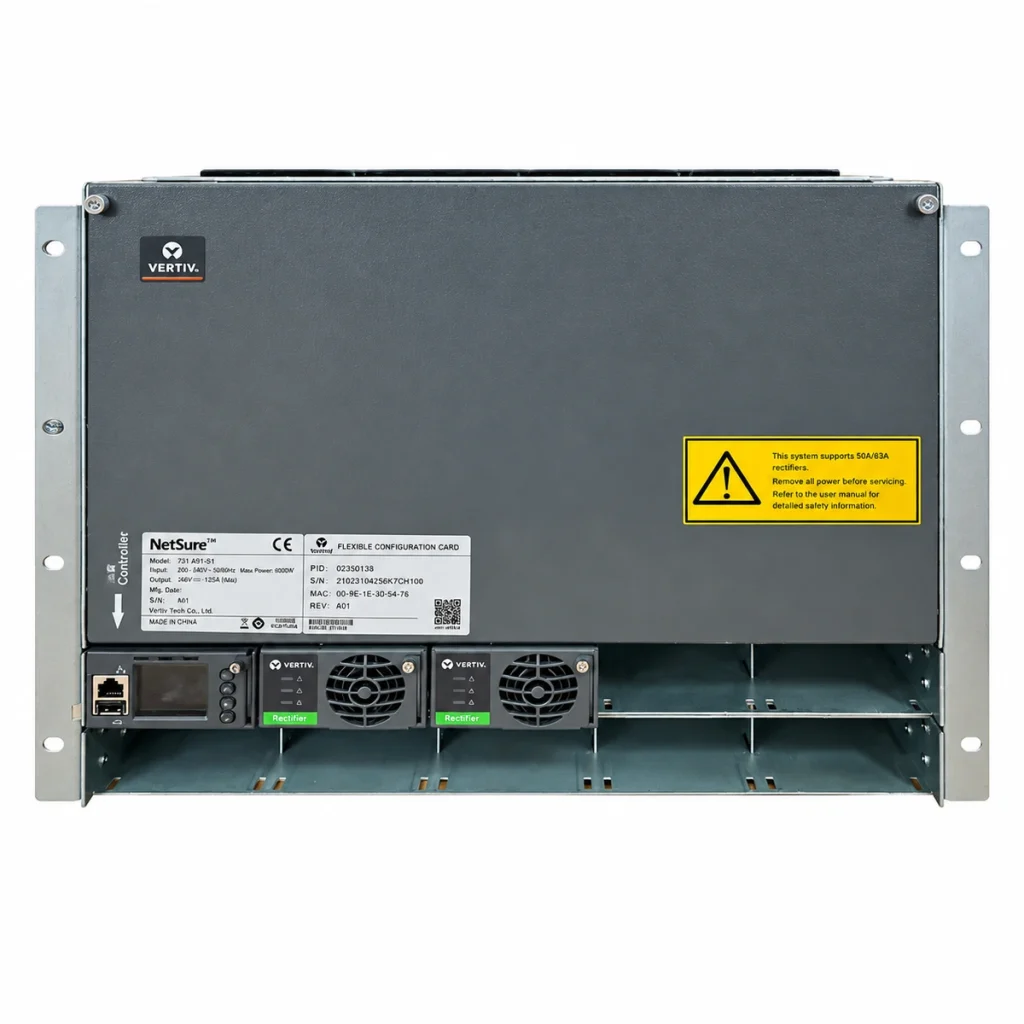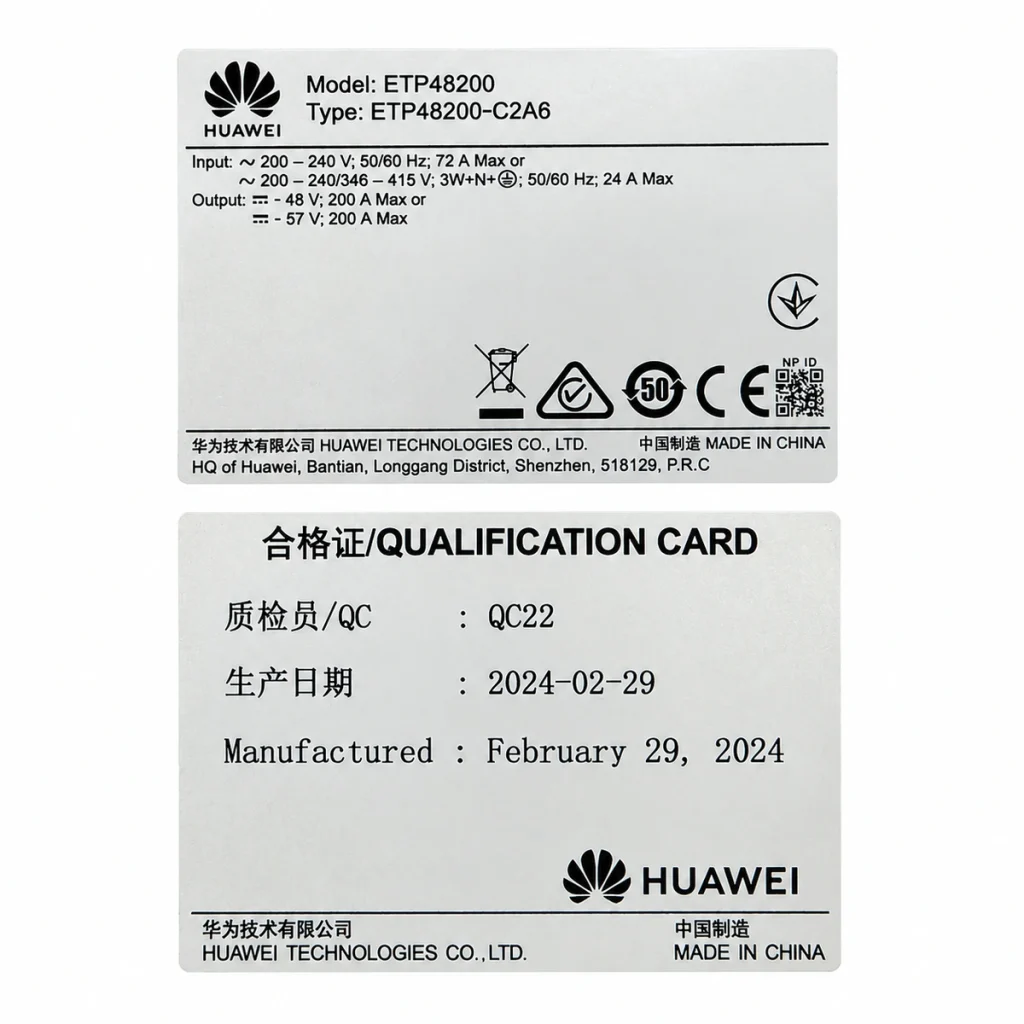
Edge data centers — the container-sized and closet-sized facilities popping up at cell sites, factory floors, retail branches, and municipal buildings — break the rules that classic data center power design was written for. Nobody is on site at 2 a.m., floor space is measured in rack units rather than white space, and the electrical environment is a telecom room, not a utility-fed hall. In that world, the 48 VDC modular approach — the same -48 V bus that telecom networks have run on for decades — consistently beats traditional AC UPS architectures on reliability per square meter, remote manageability, and total cost. This guide explains why, where the exceptions are, and how we spec 48V modular power for edge builds across Europe, the Middle East, Africa, South America, and Russia.
Why edge data centers are a different power problem
A core data center is a staffed building with utility redundancy, generator farms, and teams that swap batteries on schedule. An edge site is usually one to four racks in a cabinet or micro-modular shell, attached to whatever electrical service the host building has — which might be a shopping mall’s distribution board, a factory with cranes and welding loads on the same bus, or a rural cell site with its own power challenges. Three constraints follow from that reality.
First, no local staff: every intervention is a truck roll with a cost of hundreds of euros and a response time of hours to days. Second, hostile input power: the edge cabinet inherits voltage sags, surges, and outages from a commercial-grade supply it does not control. Third, thermal and space ceilings: power electronics and batteries compete with IT load for the same few kilowatts of cooling and the same rack centimeters. Any power architecture that adds conversion stages, floor-standing enclosures, or maintenance-hungry components fights all three constraints at once.
Why the 48V DC bus wins at the edge
The traditional edge power design copies the data center playbook: utility AC into a monolithic double-conversion UPS, AC out to rack power supplies, which convert back to 12 V or 48 V DC inside each device. Every watt crosses two to three conversion stages, each costing 2 to 8 percent efficiency, and the UPS itself is a single point of failure that requires factory-service interventions when a capacitor or inverter module dies.
The 48V DC architecture shortens that chain. Rectifiers convert utility AC to a -48 VDC bus once; the bus feeds DC power panels; devices either accept 48 V directly (telecom gear, most network equipment, increasingly GPU and storage systems designed for 48 V racks) or use small DC-DC bricks inside the rack. The gains are structural:
One conversion stage instead of two or three. Modern telecom rectifiers run 96.5 percent peak efficiency; a double-conversion UPS plus server PSU chain lands at 85 to 90 percent end-to-end under real load profiles. Across a 10 kW edge site, that difference is 5,000 to 9,000 kWh per year — which is also 5 to 9 kW of heat you do not have to cool.
Batteries on the DC bus are inherently modular. The -48 V telecom world standardised rack batteries decades ago: strings of 12 V monoblocs or 48 V lithium racks that any technician can swap. There is no UPS inverter between battery and load — during an outage, the bus simply keeps running. Transfer time is zero, because there is no transfer.
N+1 is granular. A monolithic 10 kVA UPS that loses its inverter loses 100 percent of its capacity. A DC plant with five 3 kW rectifier modules that loses one module loses 20 percent of rectifier capacity and, if sized N+1, nothing at all. Redundancy at the module level matches the failure statistics of real hardware better than redundancy at the appliance level.
It is the native language of the surrounding network. Edge sites that live alongside telecom gear — 5G base station hosts, aggregation points, FTTH OLT rooms — share rectifier spares, battery types, monitoring conventions, and technician skills with the telecom plant. One spares pool instead of two. This is the same platform logic we describe in our guide to choosing 48V telecom rectifiers, and it applies with extra force at the edge, where fleet sizes are large and per-site margins are thin.
Modular UPS, rectifier plant, or hybrid: mapping the options
“Modular UPS” gets used loosely, so define the three architectures you will actually meet at the edge:
Pure 48V DC plant (rectifiers + DC battery bus). The telecom classic. Best when the IT load is network equipment with 48 V inputs or acceptable DC bricks, and when the site coexists with telecom infrastructure. Highest efficiency, lowest maintenance, deepest spares commonality. This is our default recommendation for greenfield edge rooms in carrier and enterprise contexts.
48V modular UPS (AC-output, modular cartridges). Rack-frame UPS systems built from swappable 5 to 50 kVA power+battery modules, outputting AC. Right answer when significant IT load is fixed at 230 V AC input with no economical DC path — legacy servers, third-party appliances — and when growth is unpredictable, because you add modules as load arrives instead of pre-buying capacity. The 48V modular UPS class also pairs naturally with lithium batteries, which shrink footprint dramatically versus VRLA strings.
Hybrid DC + inverter sections. A DC bus at the core with a modular inverter cartridge feeding AC loads — effectively a DC plant wearing a UPS hat. Growing in popularity for edge rooms that mix new DC-native compute with a shrinking tail of AC-only devices. One frame, one battery bank, two output regimes.
The selection arithmetic is unforgiving about one variable: what fraction of the IT load can run on DC natively? Above roughly 60 percent, the pure DC plant wins on lifecycle cost. Below 40 percent, a modular AC UPS is usually simpler. In between, price the hybrid frame against the extra conversion losses of option two — and remember to price cooling for those losses, because at the edge, heat is square meters.
Lithium versus VRLA in edge cabinets
Edge sites concentrate every disadvantage of valve-regulated lead-acid: high ambient temperatures, partial cycling from frequent grid disturbances, no staff to check torque and electrolyte, and floor loading limits in host buildings. Lithium iron phosphate racks flip each disadvantage. They tolerate 25 to 35 °C ambient with modest derating instead of halving float life; their BMS reports cell-level health northbound so a failing module is a dashboard event, not a surprise; and a 48V/100Ah LFP rack occupies roughly a quarter of the volume of the VRLA string delivering equal energy.
The premium is real — lithium runs roughly 1.8 to 2.5 times the VRLA price per usable kWh at purchase — but edge sites do not buy on purchase price. They buy on truck-roll avoidance. A VRLA bank in a 30 °C cabinet is a scheduled replacement every 2 to 3 years; over a 10-year site life that is 3 to 4 replacement interventions per site, which erases the price gap several times over in labor alone. Our reference BOMs below assume lithium for exactly this reason; we still quote VRLA where a customer’s asset lifecycle or procurement rules require it.
One caution: lithium at the edge still needs thermal sense. Cabinet internal temperature above roughly 45 °C triggers BMS charge inhibition, and a battery that cannot charge is a silent outage waiting for the next grid event. In hot climates, edge cabinets need heat exchangers or active cooling — the same thermal argument we make for 5G shelters, where we deploy precision units like the Liebert PEX3 at shelter scale and its sibling PEX4 full-frequency series where inverter-driven part-load efficiency matters.
Sizing and redundancy: the edge arithmetic
Edge load sizing starts smaller than people expect. A single-rack edge compute site (edge AI inference, retail transaction processing, small CDN pop) runs 3 to 6 kW of IT load. A two-to-four rack micro data center runs 8 to 20 kW. Size the DC plant for the two-year forecast, not the five-year dream, and buy the growth as rectifier modules — that is what modularity is for.
Redundancy discipline at the edge: N+1 rectifiers, 2N power paths where the IT gear supports dual feeds, and battery autonomy sized to the response SLA, not to an arbitrary uptime number. If your maintenance contract promises 8-hour response, size 8 hours of battery at real load plus margin; if the site is a 24-hour drive from the nearest technician, autonomy is the design driver and the battery line item dominates. Autonomy on a DC bus is cheaper per hour than on a UPS because you are not sizing an inverter to carry it — you are sizing chemistry.
Input-side reality check: many edge sites land on single-phase 230 V with 16 A breakers shared with building loads. That caps deployable plant size around 3.5 kW continuous without electrical works. Discover this before choosing hardware, not after the crane leaves.
Total cost of ownership: a worked 10 kW example
Numbers make the architecture argument concrete. Take a 10 kW IT load edge site over a 10-year horizon. The pure DC route: 6× 3 kW rectifiers (N+1), 8 lithium racks, DC distribution — hardware typically lands 15 to 25 percent above a comparable single modular AC UPS frame, mostly in the battery line. But the operating ledger runs the other way every year: 8 to 10 percent lower conversion losses (worth roughly 7,000 to 9,000 kWh and its cooling annually), zero UPS inverter service events, condition-based battery replacement instead of calendar-based, and module-level repairs that field technicians complete without factory service calls. Modelled conservatively at European commercial power prices, the DC route crosses below the UPS route in year 3 and finishes the decade 20 to 35 percent cheaper all-in. In high-tariff or high-heat regions the gap widens; in low-tariff temperate sites it narrows but rarely reverses — the truck-roll avoidance alone carries the argument when staff never see the site.
Two honesty notes for your own model. First, if your IT load is overwhelmingly AC-locked legacy hardware, add the DC-AC inverter cartridge cost (or a second conversion) to the DC column — that is the case where the modular UPS frame fights back. Second, lithium battery replacement at year 8 to 10 is a real line item in both architectures; the difference is that lithium modules swap in rack-sized units during a scheduled visit, while VRLA string replacement at scale is a logistics project. Price the labor, not just the cells.
Remote operations: the feature that pays for itself first
The economics of edge power are mostly logistics economics, and monitoring is the lever. The features that matter, in order of payback speed: per-rectifier telemetry (a degrading module shows up weeks before it fails), battery SOC and per-module health (transform battery replacement from calendar-based to condition-based), input power quality logging (proves to the host building’s electrician that their crane load is killing your capacitors), and door/access events correlated with power events (a shocking fraction of “power failures” at edge sites turn out to be unplugged equipment after third-party works).
Standardise on one northbound protocol across the fleet — SNMP v3 or Modbus TCP into your NMS, or MQTT into a cloud dashboard if you operate lean. A fleet of 50 edge sites managed from one dashboard with condition-based dispatch needs roughly one-third the field engineering headcount of the same fleet managed by alarms and calendar maintenance. That headcount delta is worth more than the entire power hardware line item within two years.
Reference BOMs for two edge profiles
Profile 1 — Network edge room, DC-native (carrier aggregation, 5G host + edge compute): 48 V plant sized 15 kW N+1 (6× 3 kW rectifiers), 4× 48V/100Ah LFP racks (8-hour autonomy at 5 kW), DC distribution with dual-feed panels, SNMP v3 northbound, heat exchanger sized for 25 °C internal rise. Shares spares with the operator’s telecom fleet.
Profile 2 — Enterprise micro data center, mixed AC/DC (factory or retail, 2 racks): modular 48V UPS frame, 2× 10 kVA modules N+1 with lithium battery cartridges feeding an AC distribution panel, plus a 48 V DC section (2× 3 kW rectifiers) for network gear; lithium throughout; condition-based battery monitoring. Growth path: add UPS modules rather than replacing the frame.
Both profiles are starting points. Site power quality, host-building constraints, and the IT load’s DC-compatibility decide the final architecture — we adjust after reviewing the load audit, and we keep the cross-reference chart handy so module spares stay interchangeable across Huawei, Vertiv, Eltek, and ZTE fleets.
FAQ — Edge Data Center 48V Modular Power
Frequently asked questions
Q: Is a 48V DC plant really more efficient than a modern modular UPS?
A: For DC-native loads, yes, and by more than spec sheets suggest. The comparison that matters is end-to-end: utility AC → rectifier (96.5%) → DC bus → device (DC-DC only, 95%++) versus utility AC → UPS double conversion (94 to 97%) → building AC distribution → server PSU (90 to 94%). At realistic partial loads — and edge sites live at partial load every night — the DC path saves 6 to 10 percentage points, which is heat you never have to cool from a cabinet that cannot spare the capacity.
Q: Can I mix existing AC-only servers with a 48V edge plant?
A: Yes, two ways. Rack-mount 48V-to-230V inverter cartridges keep everything on one battery-backed DC bus and are the clean path for a mixed fleet; or keep a small modular AC UPS section alongside the DC plant for the AC tail. The economics hinge on the AC fraction: below roughly 40 percent of load, inverter cartridges on the DC bus usually win on lifecycle cost because one battery bank serves everything.
Q: How much lithium battery does an edge site need?
A: Size to your maintenance response SLA, not to uptime folklore. A site with next-business-day support needs 4 to 6 hours at true load; a remote site with 24-hour response needs 12 to 24 hours or a generator input. A 5 kW edge load at 8 hours is roughly 6 kWh usable — about two 48V/100Ah LFP racks accounting for depth-of-discharge margins — which is one reason lithium’s energy density decides edge designs that VRLA simply cannot fit.
Q: What fails first in edge power systems?
A: In our field experience: batteries that cooked in hot cabinets, rectifier fans clogged by dust, and input breakers tripped by host-building load events — in that order. All three are monitoring failures before they are hardware failures. Per-rectifier telemetry, cabinet temperature trending, and input power logging catch two of the three early and explain the third when it happens.
Q: Does modular UPS or DC plant make more sense for a 5G base station host with edge compute?
A: The DC plant, decisively, when the radio and most network gear already run on the site’s -48 V bus — you inherit the rectifiers, batteries, and monitoring that the telecom plant already has, and the edge compute joins the same bus with DC bricks. A separate AC UPS is only justified when the compute fraction is large and AC-locked. This is the same one-spares-pool logic that makes 48V the standard in hybrid and off-grid telecom power designs.
Q: How do I plan capacity growth without oversizing on day one?
A: Buy the frame once and the modules as needed: a DC plant or modular UPS frame sized for the five-year peak, populated to the two-year forecast with N+1. Rectifier and UPS modules slot in without downtime in both architectures. The mistake to avoid is buying a bigger monolithic unit “for growth” — at the edge, the frame-and-modules approach turns capex phasing into a procurement setting instead of a construction project.